 PhrasePort
🇯🇵 Japanese phrases
How Much Is It in Japanese? Yen, Tax and Paying at the Counter
The phrase you need is “Kore wa ikura desu ka?” (これはいくらですか), which means “How much is this?” If you are pointing at something, you can shorten it to “Ikura desu ka?”. The hard part is not the question. It is understanding the answer, which will be a number in yen.
- How much does this cost?これはいくらですかKore wa ikura desu kaSay it while pointing. You can also hold the item up.
- How much is it? (short)いくらですかIkura desu ka
- How much will it cost?いくらかかりますかIkura kakarimasu kaFor services, such as a taxi or a laundry.
Understanding the answer: yen and big numbers
Prices are in yen (円, en). Staff will say the number and then “en desu”. For example, 1,200 yen is “Sen nihyaku en desu”.
The key to Japanese prices is that large numbers are counted in units of ten thousand (man), not thousands. So the useful words to learn are:
- Hundred百Hyaku
- Thousand千Sen
- Ten thousand一万Ichiman10,000 yen is the largest note, ichiman-en.
- Ten十Juu
Some numbers change their sound when they are combined. These are the ones you will hear most often:
| Number | Say it | Written |
|---|---|---|
| 100 | hyaku | 百 |
| 300 | sanbyaku | 三百 |
| 600 | roppyaku | 六百 |
| 800 | happyaku | 八百 |
| 1,000 | sen | 千 |
| 3,000 | sanzen | 三千 |
| 8,000 | hassen | 八千 |
| 10,000 | ichiman | 一万 |
If you cannot follow the number, ask the staff to show you. Most registers have a display, and many staff will type the amount into a calculator.
Tax: what the price tag means
Price tags can show the price with tax or before it, so check which one you are looking at.
- 税込 (zeikomi) means tax included.
- 税抜 (zeinuki) means before tax.
The consumption tax is currently 10 percent for most goods and 8 percent for food bought to take away and groceries. If the tag is not clear, ask:
- Is tax included?税込ですかZeikomi desu ka
Tax-free shopping for visitors
Many stores offer tax-free shopping to visitors, but the system changed on 1 November 2026. Under the new refund system, you show your passport at the register and pay the full price, including the 10 percent tax. The store records your purchase electronically, and you claim the tax back at a kiosk at the airport when you leave Japan. Keep your receipts, and check the current rules on the Japan Tourism Agency website before you shop, because the details are still settling.
- Tax-free procedure, please. Here is my passport.免税手続きをお願いします。パスポートです。Menzei tetsuzuki o onegai shimasu. Pasupooto desu.Say it at the register, and hand over your passport. Not every shop takes part.
Paying: cash, cards and the little tray
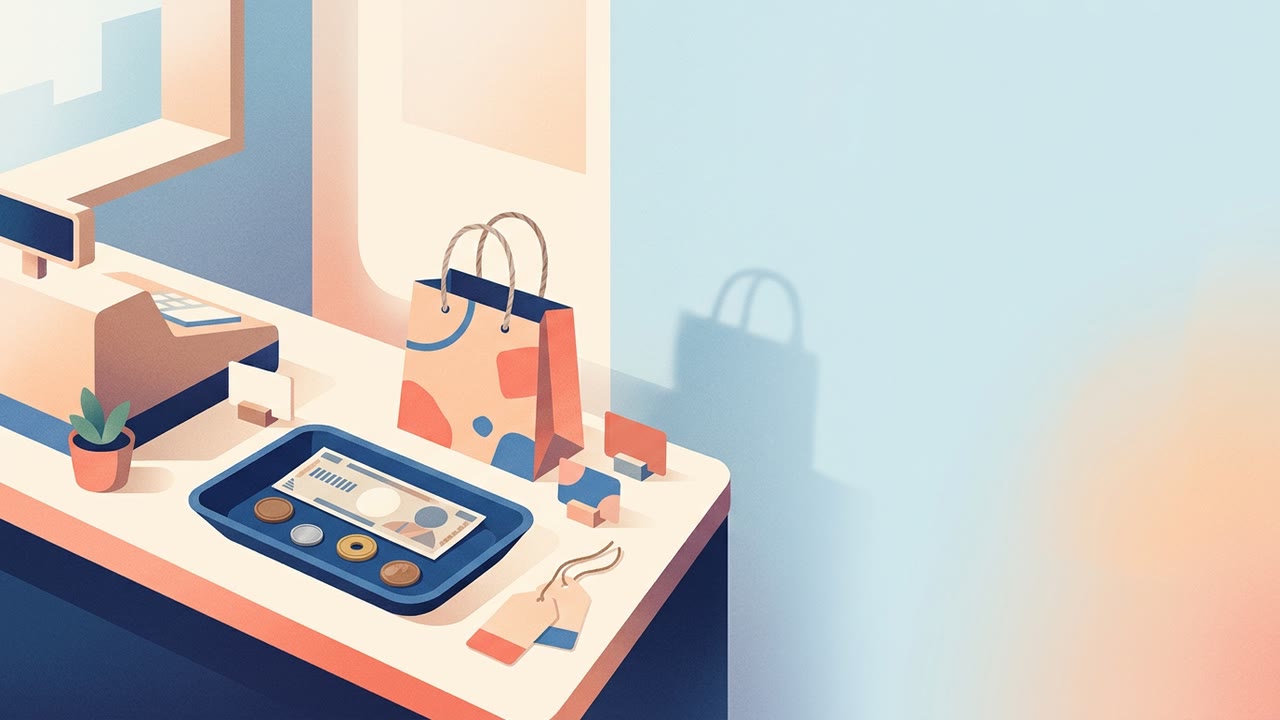
Many Japanese shops put a small tray at the register. Place your money on the tray rather than handing it over, and your change will be returned the same way.
Cards are widely accepted in cities and chains, but small restaurants and family-run shops often take cash only. Contactless and travel IC cards, such as Suica and Pasmo, are accepted at many shops, convenience stores and vending machines.
- Can I pay by card?カードで払えますかKaado de haraemasu kaAsk before you order in a small place.
- Where is the nearest ATM?一番近いATMはどこですかIchiban chikai Ee tii emu wa doko desu kaSeven Bank ATMs (in 7-Eleven) and Japan Post ATMs are the usual choices for foreign cards. Not every card works, so check with your bank.
- Can I get a receipt?領収書をもらえますかRyoushuusho o moraemasu kaA formal receipt. Useful if you need one to claim expenses.
- Do you have a discount?割引はありますかWaribiki wa arimasu kaAsk about sales, coupons or a points card. Do not try to haggle.
- I do not need a bag袋はいりませんFukuro wa irimasen
- Do you need a bag? (staff)袋はご利用ですかFukuro wa goriyou desu ka
Other places you will ask “how much?”
- How much is a ticket to...?...までの切符はいくらですか... made no kippu wa ikura desu kaSay the destination in place of the dots.
- How much is the entrance fee?入場料はいくらですかNyuujouryou wa ikura desu kaAt a temple, castle or museum.
- How much is the buffet?ビュッフェの料金はいくらですか?Byuffe no ryoukin wa ikura desu ka?
A short scene: at the shop counter
- Staffいらっしゃいませ。Irasshaimase.Welcome.
- Youすみません。これはいくらですか?Sumimasen. Kore wa ikura desu ka?Excuse me. How much is this? (pointing)
- Staff千二百円です。Sen nihyaku en desu.It is 1,200 yen.
- Youカードで払えますか?Kaado de haraemasu ka?Can I pay by card?
- Staffはい、大丈夫です。袋はご利用ですか?Hai, daijoubu desu. Fukuro wa goriyou desu ka?Yes, that is fine. Do you need a bag?
- You袋はいりません。Fukuro wa irimasen.No bag, thank you.
- Staffありがとうございました。Arigatou gozaimashita.Thank you very much.
Common mistakes
- Trying to bargain. Prices are fixed in nearly all shops. It can embarrass the staff.
- Reading 10,000 as “ten thousand” and 1,000 as “a thousand” the wrong way round. Japanese counts in ten-thousands. Practise ichiman before you arrive.
- Assuming a card will work. Carry cash, especially for small restaurants and markets.
- Handing money to the staff. Use the tray if there is one.
- Forgetting to check whether tax is included. The tag may show the price before tax.
More for your trip
Paying at a restaurant works differently from a shop, so read how to order food in Japanese. For the full set of phrases you will need, see our Japanese phrases for travel.
Questions travelers ask
Can I bargain in Japan?
Not in most places. Prices in shops, department stores and supermarkets are fixed, and haggling is not customary. Flea markets and some second-hand shops are the main exceptions. If you want a better price, ask about discounts, points cards or tax-free shopping instead.
Do prices in Japan include tax?
It depends on the tag. Look for 税込 (zeikomi), which means tax included, or 税抜 (zeinuki), which means before tax. The consumption tax is 10 percent for most goods, and 8 percent for food bought to take away and groceries.
Can I pay by card in Japan?
In cities, many shops, hotels and chains take cards, and contactless and travel IC cards work widely. Small restaurants, family-run shops and rural places often take cash only. Carry some yen, and ask "Kaado de haraemasu ka?" (Can I pay by card?).
Can tourists still shop tax-free in Japan?
Yes, but the system changed on 1 November 2026. You now pay the full price including tax, show your passport so the shop can register the purchase, and claim the refund at a kiosk at the airport when you leave. Keep your receipts and check the Japan Tourism Agency website for the current rules.
How do I read prices in the tens of thousands?
Japanese counts in units of ten thousand (man). So 10,000 yen is ichiman-en, and 25,000 yen is niman gosen-en (two ten-thousands, five thousand). Learn hyaku (100), sen (1,000) and man (10,000) and you can read most price tags.
More guides
 🇯🇵 JapaneseHow to Say Hello in Japanese: Greetings, Bowing and GoodbyesHow to say hello in Japanese, with audio and pronunciation: greetings for morning, day and evening, goodbye, thank you, introductions and how to bow.November 12, 2026 · 5 min read
 🇯🇵 JapaneseJapanese Emergency Phrases: 119, the Koban and EarthquakesJapanese emergency phrases with audio: how to call the police and an ambulance, report lost or stolen items, find a doctor and react to an earthquake.November 12, 2026 · 5 min read
 🇯🇵 JapaneseJapanese Hotel Phrases: Check-In, Ryokan and CheckoutJapanese hotel phrases with audio for check-in, room problems, luggage and checkout, plus what to expect in business hotels, ryokan and capsule hotels.November 12, 2026 · 3 min read